For most of the last century, cardiac surgery meant the chest open, the heart stopped, and a machine doing the pumping while a surgeon worked.
That picture is changing fast. Catheter-based techniques — threading tiny tools through your blood vessels instead of cutting through your chest — have rewritten what's possible. The pace since 2020 has been remarkable. Worth knowing what exists, so you can ask better questions when it matters.
1. Heart valve replacement without opening the chest
Aortic stenosis — the narrowing of a heart valve — used to mean open-chest surgery. Long recovery. High risk for older patients.
Now there's TAVR (or TAVI in the UK). The cardiologist threads a folded replacement valve up through an artery in your groin, deploys it inside the old valve, and you go home in two or three days instead of two weeks.
This isn't experimental. Long-term data spans more than a decade. For most patients with significant aortic stenosis — across all risk levels now — it's become the default approach.
2. Stents you don't have to keep
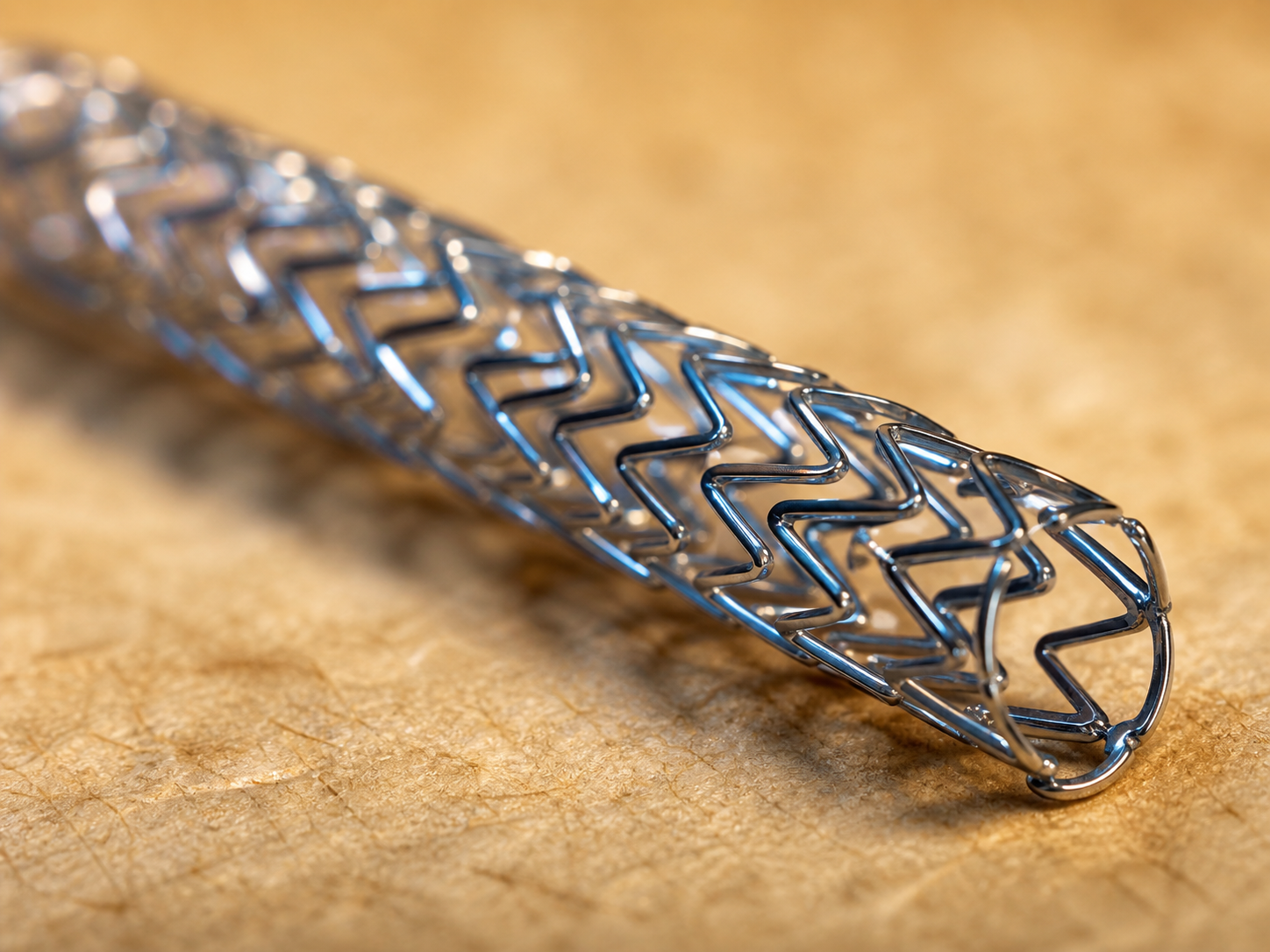
For decades, fixing a blocked artery meant leaving a metal stent permanently inside it.
Now there's an alternative: drug-coated balloons. They deliver medication to the artery wall as they inflate — then they're removed. No metal. No permanent implant. No lifelong dual blood-thinner regime.
Recent trials show this approach works as well as conventional drug-eluting stents for many cases. It's especially valuable for younger patients (no implant for the next fifty years), people with smaller blood vessels, and anyone who can't safely take long-term dual antiplatelet drugs.
It's not for every situation — heavily calcified or very complex blockages still need a stent. But for the first time in two decades, "no stent" is a real conversation.
3. Cracking calcified arteries with sound waves
Some artery blockages are filled with calcium so hard that a stent can't fully expand inside them. Until recently, this meant difficult, sometimes risky workarounds.
Intravascular lithotripsy — the Shockwave system — borrows the technology used to break kidney stones. A catheter delivers pulses of sonic pressure waves that crack the calcium inside the artery without damaging the softer tissue around it. The artery then opens up and the stent fits properly.
Available at most major cardiac centres now. Quietly transformative for complex cases.
4. Editing cholesterol genes in living humans
This is the one that sounds like science fiction.
In 2025, CRISPR gene editing was used in humans to permanently modify a gene called PCSK9, which controls how the liver clears LDL cholesterol from your blood. The result: a single one-time infusion produced substantial, durable cholesterol reduction. No daily statin. No injection every two weeks. A molecular edit, once.
The early data is from very selected patients. Long-term safety isn't established yet. But the proof-of-concept is real, and for people with inherited high cholesterol — the kind that causes early heart attacks in their thirties and forties — this is the development worth watching.
It's not in clinics yet. It's not five years away. But it's coming.
What this means if you have heart disease
If you've been told you need a heart valve procedure, ask whether transcatheter options have been considered. For aortic stenosis above age 65, that question now has a default "yes."
If you have a coronary blockage and are being scheduled for stenting, "is a drug-coated balloon an option for me?" is a reasonable question — increasingly, cardiologists have a real answer.
If you have inherited high cholesterol and you're already on statins plus injections, ask your specialist about PCSK9 inhibitors if you're not already on them. They're already transformative.
Cardiology is moving faster than it ever has. Knowing the terrain is the prerequisite for navigating it.
Curiosity first. — Dr. Brugal