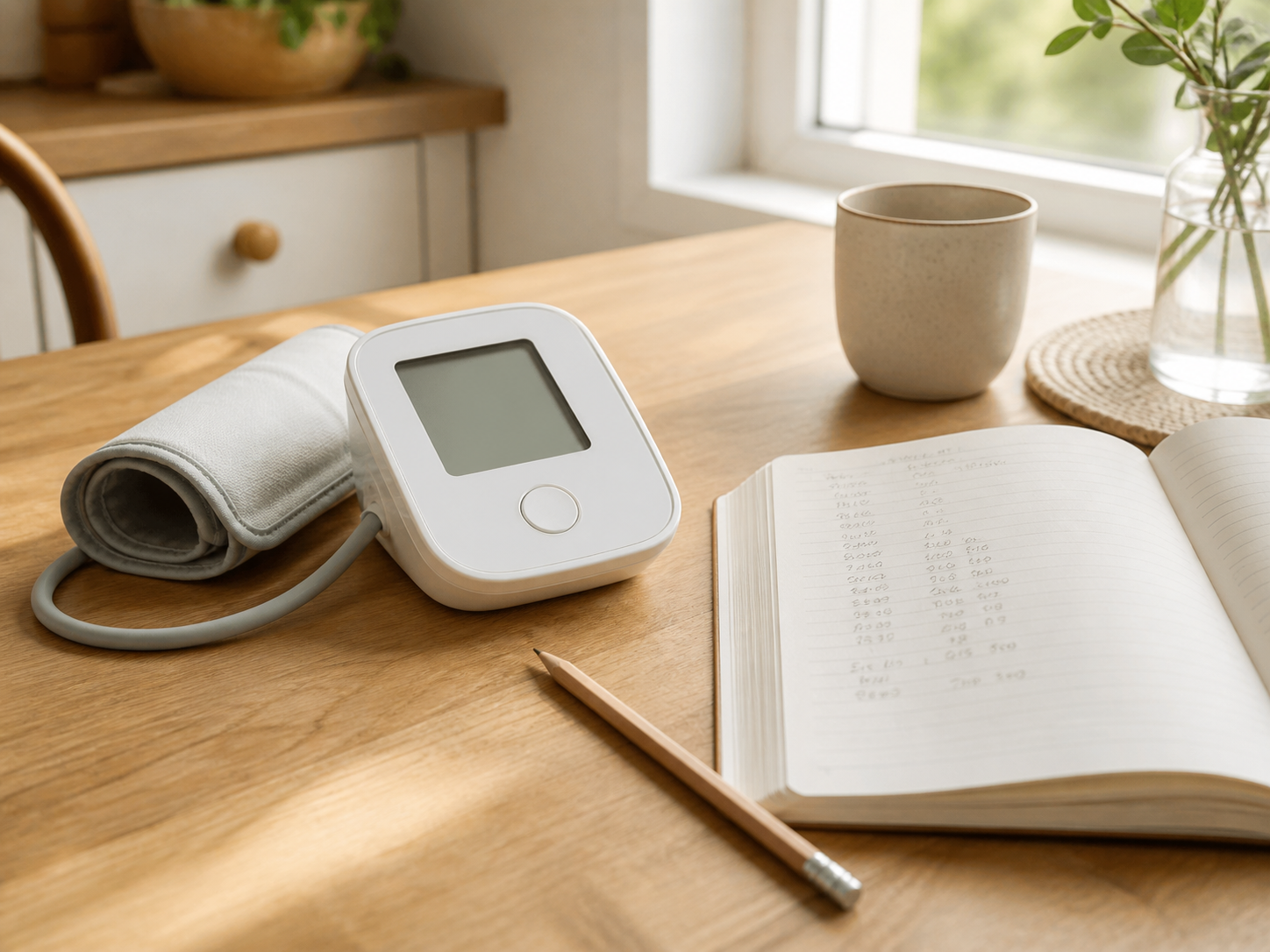
The blood pressure number you got at the doctor's office is, statistically, wrong.
Not fabricated wrong. Just not your real number. You'd rushed in, climbed stairs, sat in a chair next to a stranger in a white coat — your body responded predictably, and your reading went up. Doctors call it the "white coat effect." It can shift the systolic reading by 10 to 20 points.
The number that actually matters is your average across the day, at home. And measuring it well takes about five minutes you weren't using anyway.
The device
One rule: upper-arm cuff, not wrist. Wrist monitors are less accurate. Smartwatch BP sensors aren't validated for clinical decisions yet — fun gadget, not a tool you should trust.
Before buying, check the device is on a validated list (search "validated BP monitors" — the British and Irish Hypertension Society and validatebp.org both publish lists). And measure your upper arm: most standard cuffs fit 22-32 cm. If your arm is bigger, get a large cuff. Wrong cuff size = wrong reading.
The five-minute protocol
This is where most people get it wrong. The biggest sources of error:
- Coffee or cigarettes in the 30 minutes before
- Exercise in the 30 minutes before
- A full bladder
- Talking during the reading (yes, including the phone)
- Crossed legs
- Sleeve rolled up tightly squeezing the arm
Each one of these can spike your systolic reading by 5-20 points.
The protocol:
- Sit quietly for five minutes. Back supported. Feet flat. Don't talk. Don't scroll.
- Bare arm on a flat surface, cuff at heart level.
- Take two readings, one minute apart. Record both. The first is almost always higher. Use the average.
When to measure
Twice a day, for one to two weeks before your doctor's appointment:
- Morning: after waking, before food, coffee, or medication.
- Evening: before dinner and before any evening tablet.
This catches both the morning surge and the evening pattern — some people have evening hypertension that gets missed if you only measure once.
What the numbers mean
Home readings are interpreted slightly differently from clinic readings (because home is calmer):
- Normal: below 130/80
- Borderline: 130-139/80-89
- High: 135/85 average over a week — talk to your doctor
- Urgent: 180/120 or above with headache, chest pain or visual change — seek emergency care
Two weeks of twice-daily home readings tells your doctor more about your real cardiovascular risk than fifteen single clinic readings over three years. A device, five minutes of quiet, a simple log. Small habit, real information.
Curiosity first. — Dr. Brugal