The name sounds dramatic. The technology earns it.
What's officially called a "hybrid closed-loop system" combines three things:
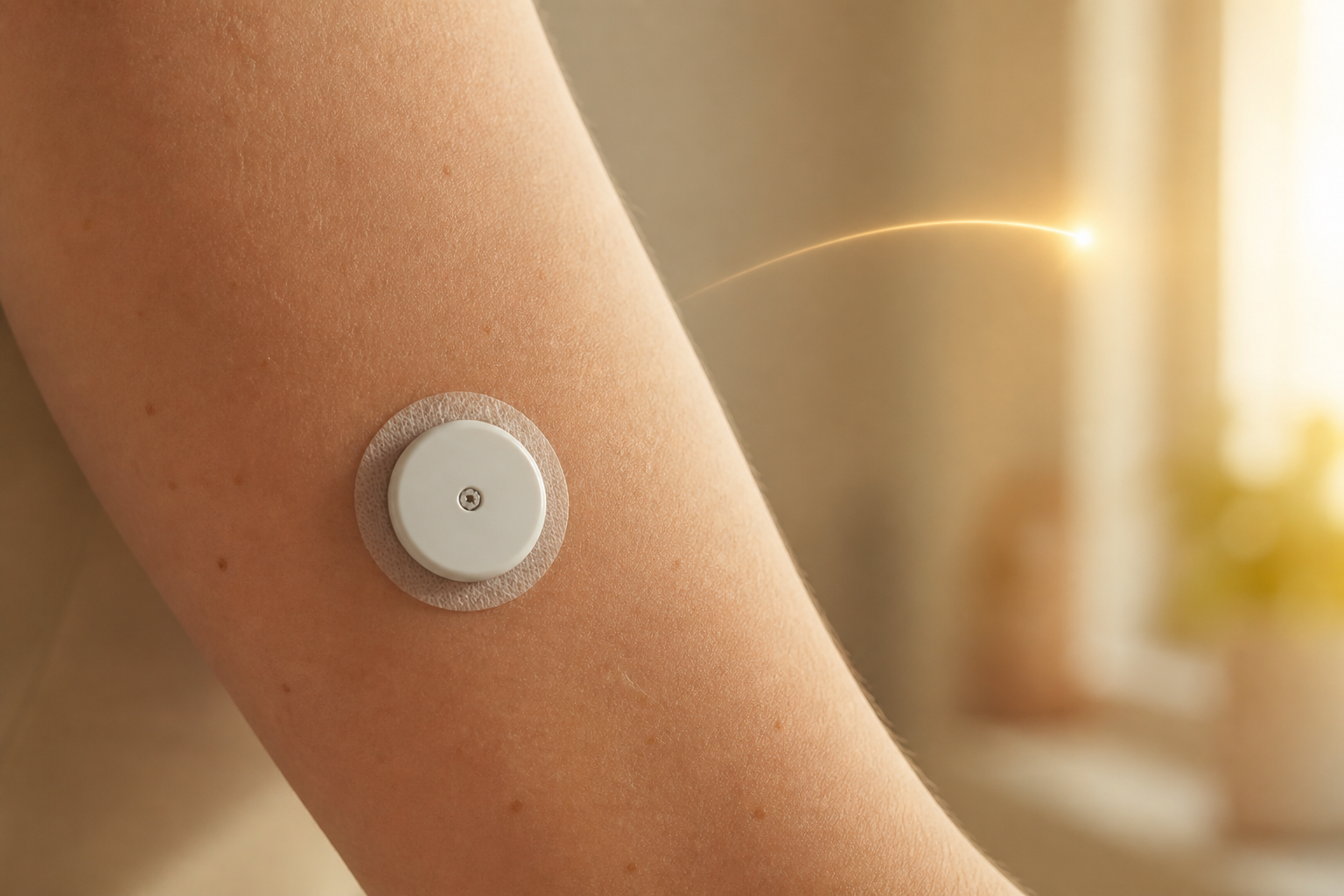
- A glucose sensor sitting just under the skin, reading your blood sugar every five minutes
- An insulin pump attached to your body, delivering tiny precise doses around the clock
- An algorithm doing the maths in between, adjusting delivery before you'd even notice your glucose moving
For someone with type 1 diabetes — whose pancreas makes no insulin at all — this is a shift from reactive management to something close to automation. Instead of measuring glucose several times a day, counting carbs, calculating doses, and injecting yourself — a cognitive load that's invisible to everyone who hasn't lived with it — the system does most of the work for you.
How it works
The glucose sensor sends a reading to your phone or pump every minute. The algorithm tracks the trend — is it climbing, dropping, holding steady? Then it adjusts how much insulin the pump delivers, in micro-amounts, ahead of where it predicts your glucose will go.
Modern sensors (Dexcom G7, FreeStyle Libre 3, others) last 10-15 days at a time, are small and light, and accurate to within roughly 9% of a lab measurement. There's even an implantable one (Eversense) that lasts a full year — placed under the skin by a clinician.
Several systems are now in clinical use worldwide: MiniMed 780G, Tandem Control-IQ, Omnipod 5, CamAPS FX. Different algorithms, different hardware, same principle.
What the evidence shows
Big trials comparing closed-loop to "regular" pump-plus-sensor therapy show consistent wins:
- More time in range. 10-15% more of the day with glucose where it should be — a meaningful improvement.
- Lower HbA1c by 0.3-0.5 percentage points on average.
- Less night-time hypoglycaemia. This is the change families notice most. The algorithm can quietly cut insulin overnight before a dangerous low happens — while you're asleep, unable to respond to alarms.
For families of children with type 1 diabetes, this isn't just about glucose numbers. It's about sleep. About the constant low-level worry being a notch quieter at 3am.
What it doesn't do
The word "hybrid" matters. These systems aren't fully automated.
You still have to announce meals — pressing a button before eating to tell the algorithm carbs are coming. A truly fully-automated system that predicted meals from glucose alone exists in research, but isn't clinically available yet.
Exercise is tricky. Activity drops glucose in ways the algorithm can only partly predict. Most systems have an "exercise mode" but it still needs your input.
And you still deal with skin reactions, sensor failures, pump occlusions, and the daily logistics of charging things and replacing sensors. It's brilliant tech. It's not magic.
How to access it
If you or a family member has type 1 diabetes and isn't yet on a closed-loop system, the first step is a conversation with your diabetes specialist nurse or consultant. Eligibility, funding, and waiting lists vary widely by country and region.
It isn't a cure. It isn't a complete solution. But for a condition that has demanded constant calculations from its patients every day of their lives, it's the most meaningful shift in daily management since the insulin pump itself.
Curiosity first. — Dr. Brugal